
School District of Westfield
Inspiring every student, through every experience, every day

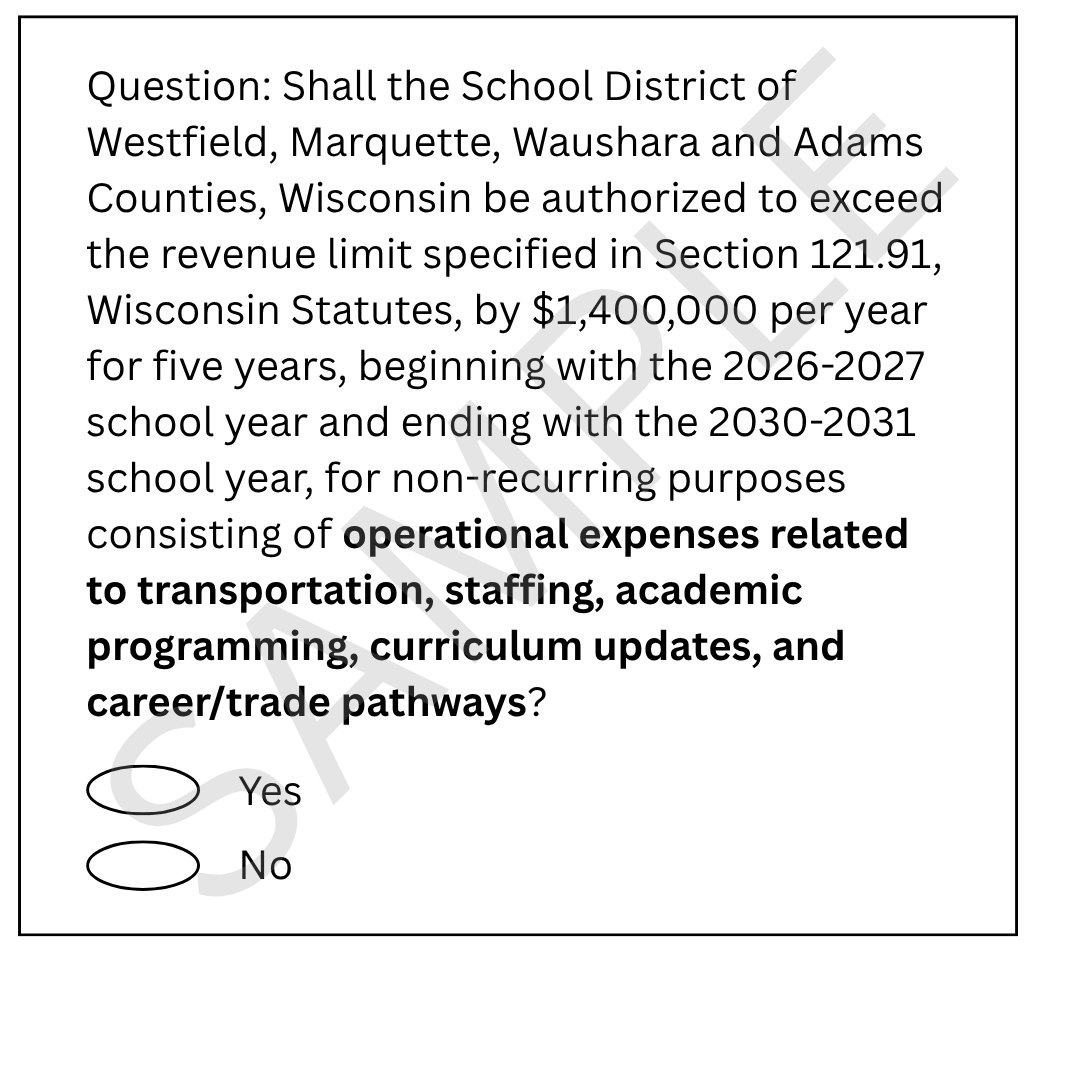
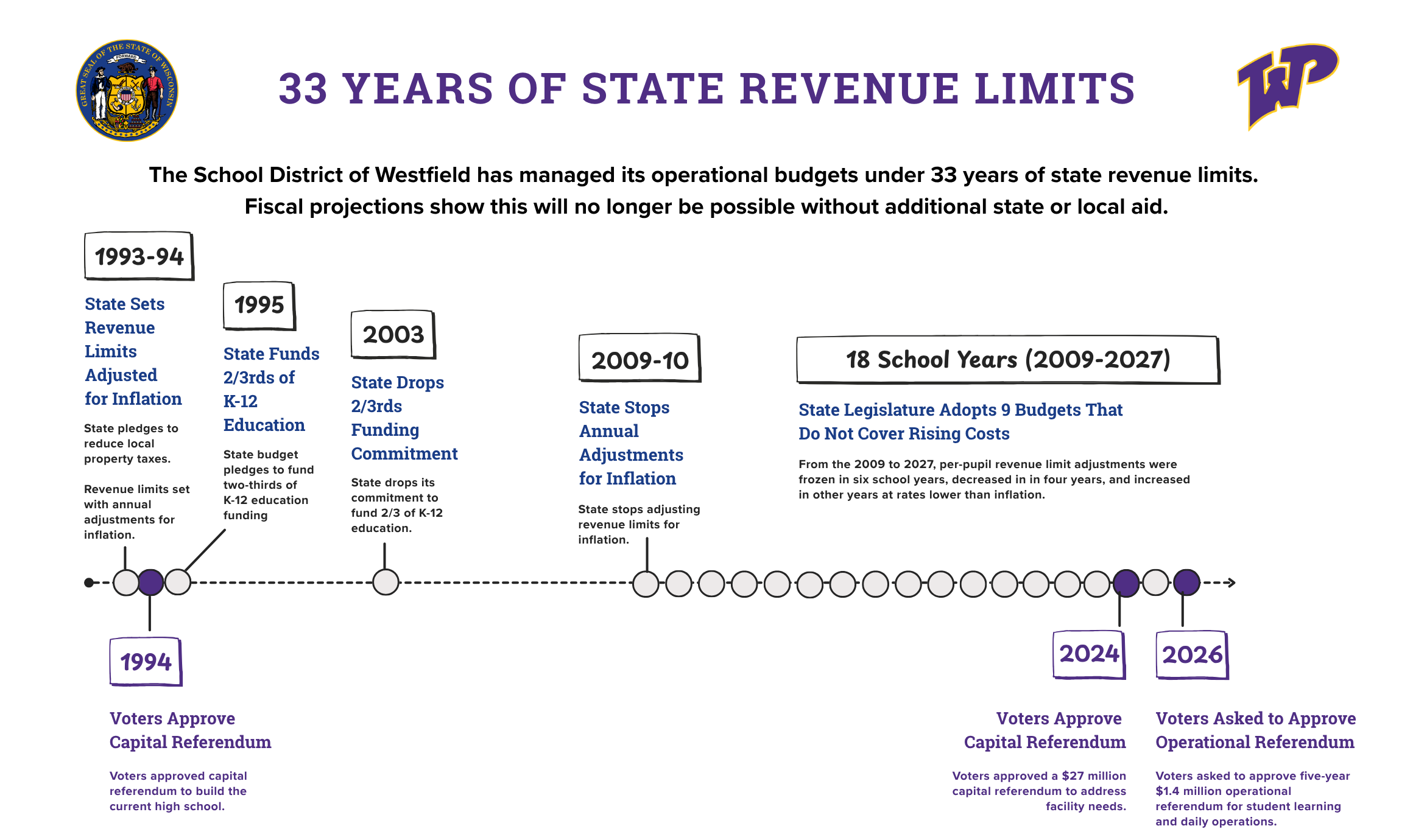
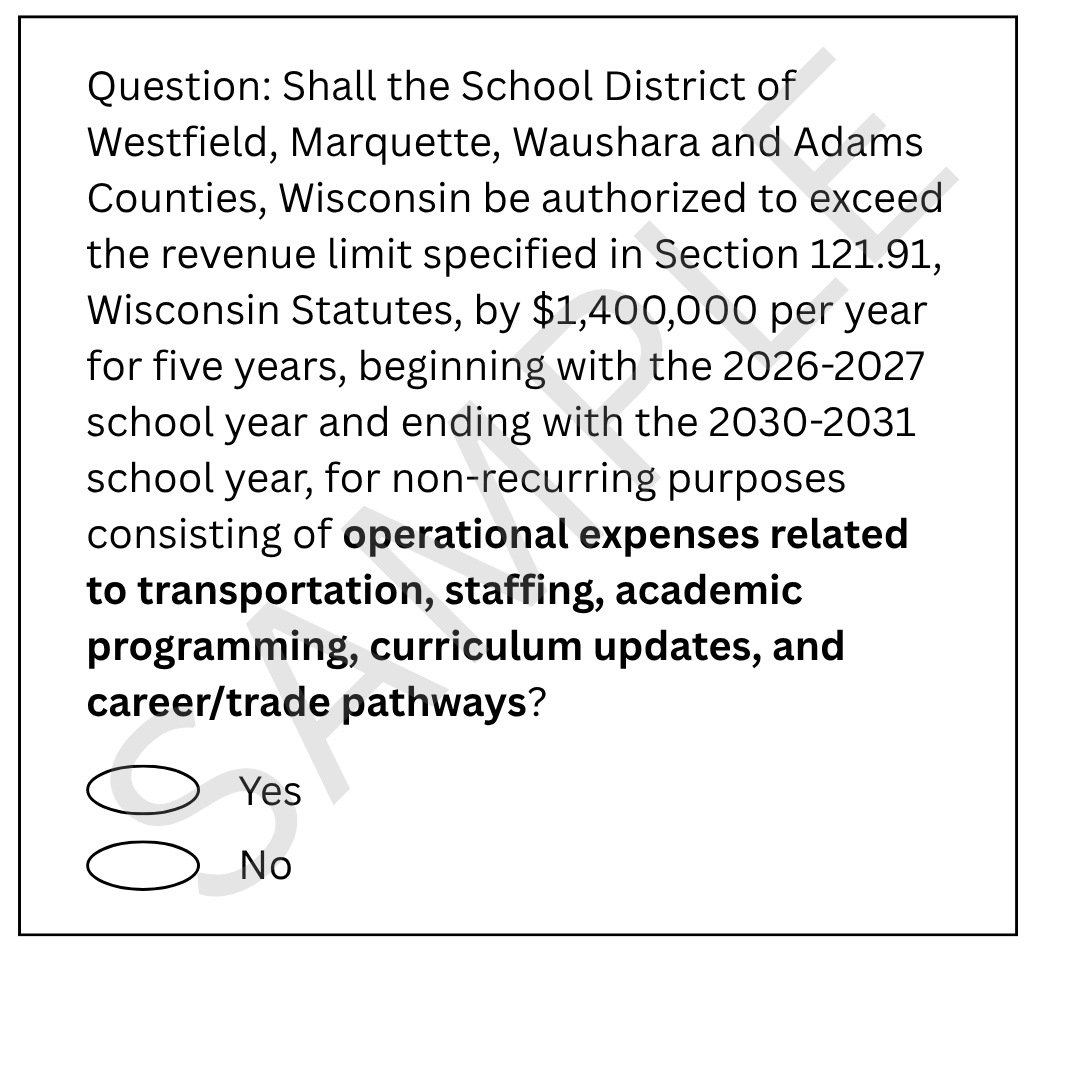
On Tuesday, November 3, 2026, the School District of Westfield is asking residents to consider a non-recurring operational referendum seeking $1.4 million per year for five years.
Residents in our communities value working hard, making do when you can, taking care of what you have and doing what's best for the next generation. They expect common-sense school spending that prioritizes what matters, protects what's essential and respects taxpayers.
We agree.
We know that money is tight. Families and seniors are paying more and making difficult choices. Our schools are facing those same rising costs. In the past two years alone, the district has cut $820,650 of recurring expenses from our rural budget.
School Year | Budget Reduction |
|---|---|
2025-26 | $393,650 |
2026-27 | $427,000 |
Total Reduction | $820,650 |
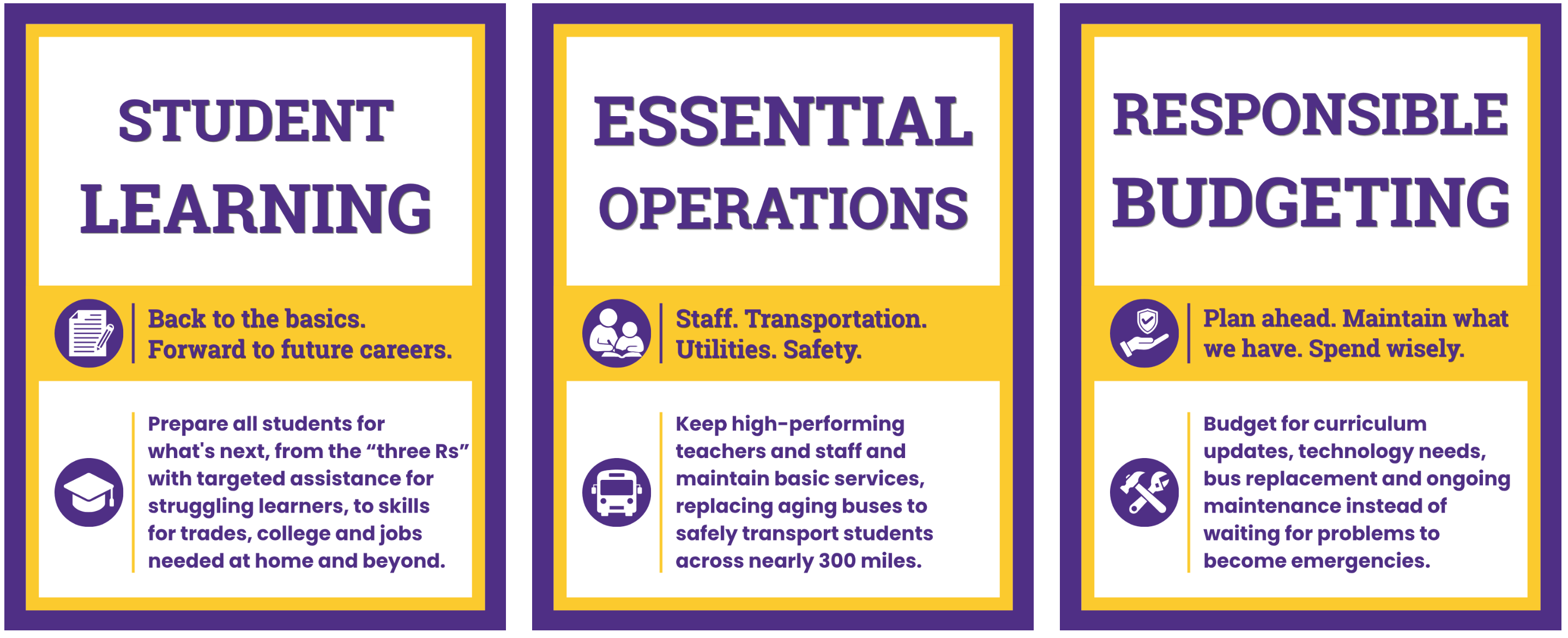
That's why this referendum is not about expanding programs or funding wants. It's about essential needs and fiscal responsibility.
Good stewardship means planning ahead and acting responsibly — not kicking the can down the road.
Like any well-run business or household, our district needs to budget for ongoing maintenance, curriculum and technology updates and competitive wages.

If approved, the estimated tax impact for the school district portion of your taxes would be 50 cents per $1,000 of fair market property value.
The District’s current school tax rate is $5.85 per $1,000 — well below the Wisconsin K-12 average of $7.09. Even with the proposed operational adjustment, the tax rate is estimated to rise to $6.35, remaining lower than the state average.
Fair Market | Estimated | Estimated |
|---|---|---|
$100,000 | $50 | $4.17 |
$200,000 | $100 | $8.33 |
$300,000 | $150 | $12.50 |
$400,000 | $200 | $16.67 |
$500,000 | $250 | $20.83 |
We are incredibly grateful for the community's overwhelming support in the November 2024 Capital Referendum (Bricks & Mortar) . This commitment allowed us to address critical, high-priority, district-wide capital maintenance needs.
We are legally restricted from using these capital funds for Operational Referendum (Kids & Learning) needs such as daily operational expenses, bus fuel, teacher salaries or learning supplies.
REFERENDUM TYPES | WHAT IT PAYS FOR (THE NEED) | KEY WAY TO REMEMBER |
|---|---|---|
Capital Referendum (Passed November 2024) | Major facilities projects, such as building construction and large-scale repairs. | It's for "Bricks and Mortar." |
Operational Referendum (Seeking in November 2026) | Daily expenses and resources to run the district, such as bus replacement, student educational programs, curriculum, staffing, utilities and insurance. | It's for "Kids and Programs." It helps keep our doors open and programs running. |



Just the facts. Listen. Ask questions.
Make up your own mind.
✅ Thursday, September 10:
Coloma Community Center
4:00 p.m.
✅ Friday, September 11:
Westfield Village Hall
11:30 a.m.
✅ Tuesday, September 15:
Pioneer Park Picnic
11:00 a.m.
✅ Thursday, September 17:
Thal Acres
6:00 p.m.
✅ Wednesday, September 30
Coloma Community Center
5:00-7:00 p.m.
✅ Tuesday, October 6:
Ethel Everhard Memorial Library
4:00 p.m.
✅ Tuesday, October 13
Neshkoro Public Library
4:00-6:00 p.m.
✅ Thursday, October 15:
Oxford Village Hall
12:00 p.m.
Tuesday, October 20:
Oxford Public Library
5:00 p.m.

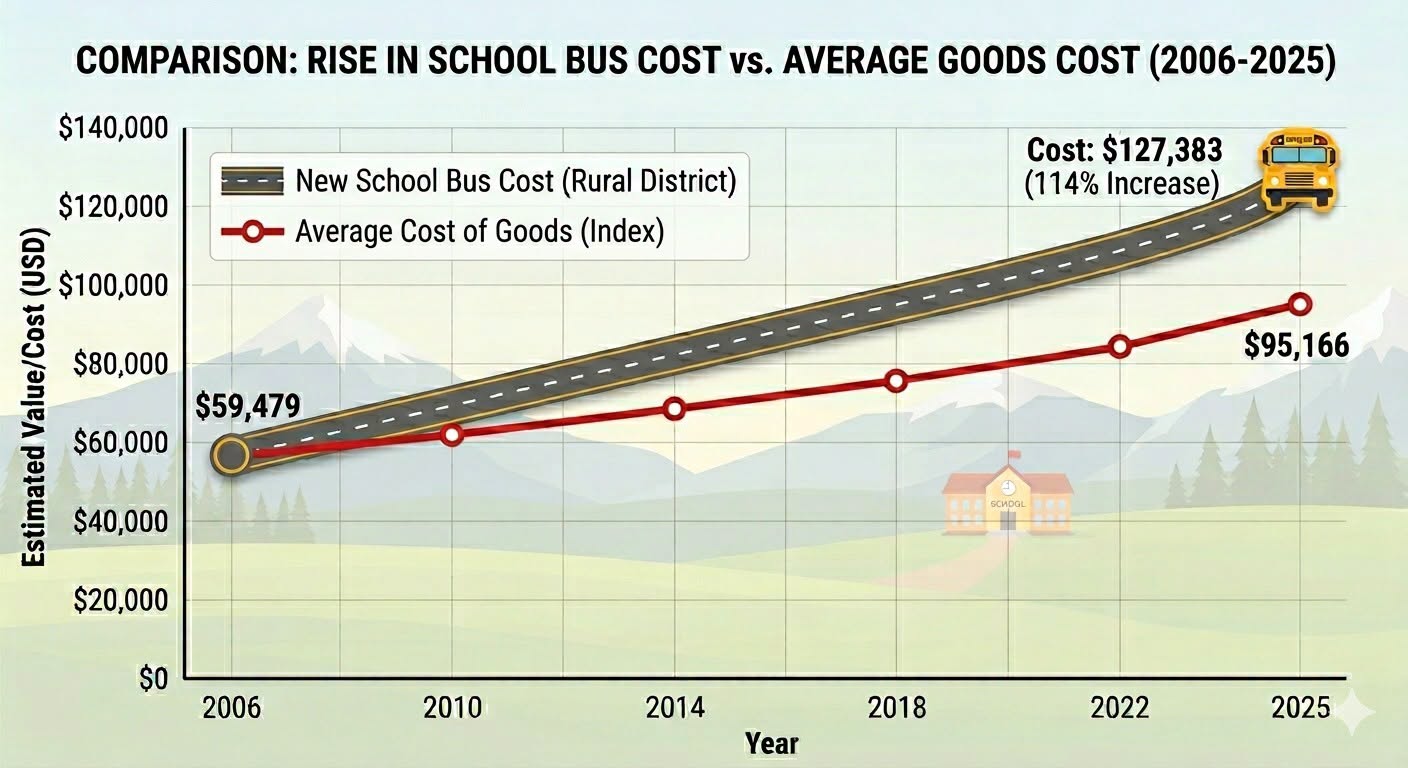
The Wisconsin Association of School Boards said a new school bus cost $59,479 in 2006 for one of the state's rural districts. By 2025, that same purchase cost $127,383, a 114% increase. By comparison, the average cost of goods rose about 60% during that period.

We are proud of our 170-year tradition of providing community-centered education since our first school opened in 1856, growing to serve 22 municipalities across 288 square miles.
We have been carefully managing district resources, looking for efficiencies, reducing staffing and expenses where possible, and stretching every taxpayer dollar. In the past two years alone, the district has cut $820,650 of recurring expenses from our rural budget.
But we are facing a growing gap between what it costs to educate our students and the money the district receives to pay for it. State funding has not kept pace with inflation.
Under the current state school funding model, in five years, our total projected budget deficit (the gap between expenses and revenues) will reach between $6 million and $8 million dollars. The range depends on whether or not the state continues to provide a $325 per pupil revenue-limit increase.
This budget gap is driven by:
rising costs in health insurance, transportation, utilities, mandated curriculum and more
state revenue limits that have not kept pace with inflation for the past 17 years (since 2009)
a state aid formula that penalizes "property rich" districts
a two-year freeze on state general school aid from 2025 to 2027 that shifted costs to local taxes
Our district is projected to lose an additional $540,275 in general state aid next school year (a 14.07% drop).
Rather than relying on short-term fixes, depleting our savings or waiting for costly emergencies, this referendum allows the district to pay for essential costs and budget responsibly for transportation, curriculum, maintenance and other ongoing needs.
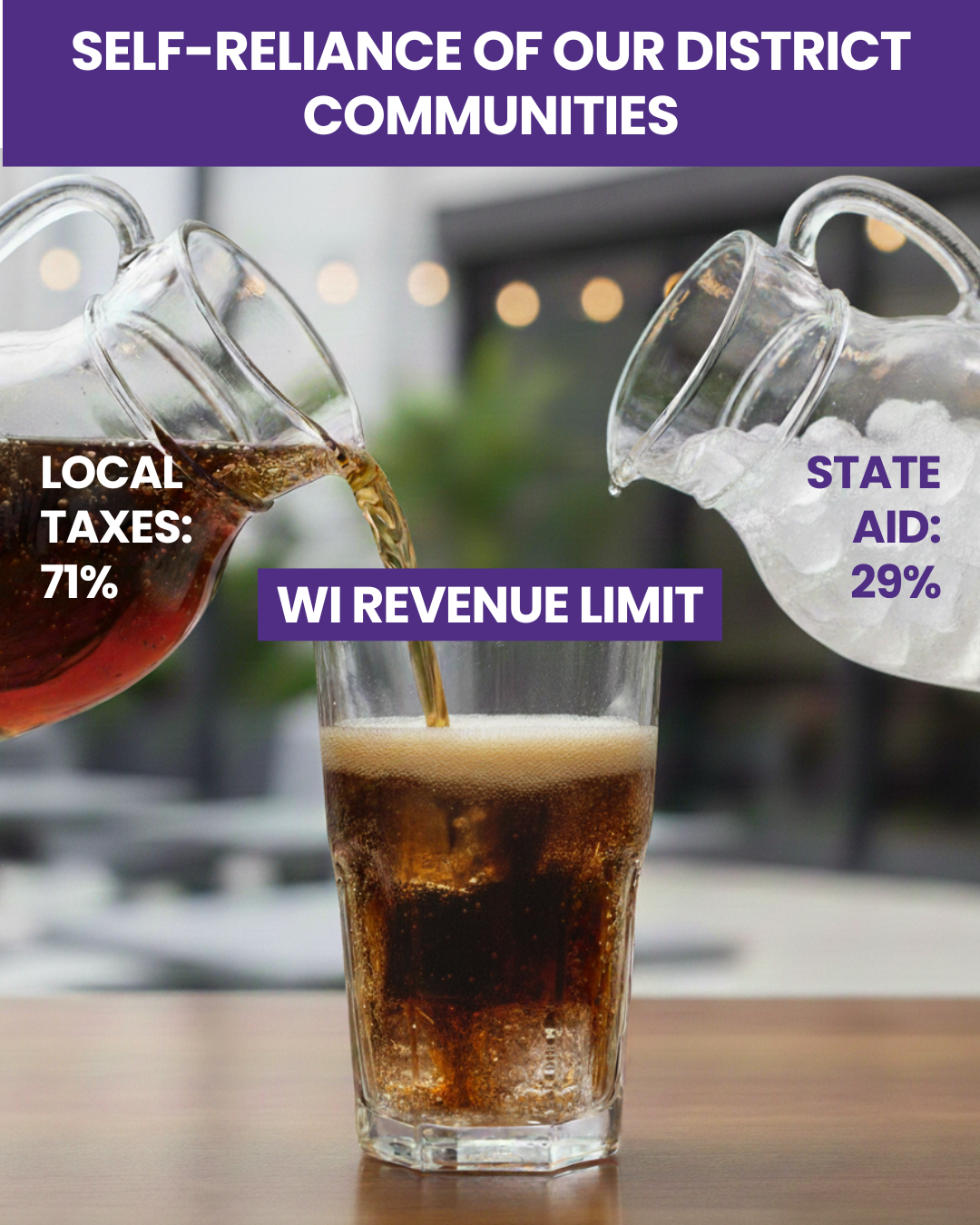
State revenue limits cap the amount of money districts can receive from the combination of state aid and local taxes. Think of it like a glass of soda, with the soda represents local taxes and the ice is state aid.
School District of Westfield local taxpayers currently provide 71.2% of the money allowed under the revenue limit (the soda) while state aid provides only 28.8% (the ice).
Approving local operational funding allows our community to exert local control — ensuring our tax dollars stay here in our communities to directly benefit our students, schools and local economy.
Voter Information
Go to www.myvote.wi.gov to:
Find your polling place
See what’s on your ballot
Register to vote
Request your absentee ballot
Vote on Election Day, November 3, 2026, between 7:00 a.m. and 8:00 p.m.
Questions: Contact your local town or village clerk for follow-up information or further details.
Michelle Johnson, District Administrator
michelle.johnson@westfieldpioneers.org
608.296.2141 ext. 1011
Veronica “Roni” VanDerhyden, Business Manager
veronica.vanderhyden@westfieldpioneers.org
608.296.2141 ext. 1006